


Excellence in Automotive Injection Molding and Plastic Components
At BillowPeak, we specialize in producing high-quality automotive injection molds designed to meet the precise needs of the automotive industry. As a trusted automotive molding partner, we manufacture durable and lightweight plastic automotive components that deliver exceptional performance. Our expertise in plastic injection molding automotive parts allows us to produce reliable automotive plastic parts with tight tolerances, helping our clients achieve their design and manufacturing goals.
As one of the leading automotive plastic parts manufacturers, we offer customized solutions for plastic moulding parts that meet industry standards. Our team of skilled engineers works closely with clients to ensure that each mold design is optimized for cost-effective production without compromising on quality. As a well-established plastic mould manufacturers in China, BillowPeak leverages advanced technology and industry knowledge to create solutions that support automotive innovation and efficiency.
We are proud to be one of the top automotive injection molding companies, delivering engineered solutions to some of the most demanding markets. Whether it’s producing plastic automotive parts for mass production or creating specialized components, BillowPeak stands at the forefront of engineered plastics technology, committed to offering the best service and product quality in the industry.
Automotive Injection Mold Product Categories
Here’s a professional and original table summarizing automotive molded plastic parts for international clients, with technical specifications and industry-specific terminology:
Automotive Molded Plastic Components Overview
| Category | Part Name | Material Specification | Key Process | Critical Feature |
|---|---|---|---|---|
| Exterior Trims | Front Grille Assembly | ABS/PC (Electroplating Grade) | IMD + PVD Coating | Class A Surface, UV Resistance |
| Bumper Cover | PP+EPDM-T20 | High-Pressure Molding (2700T) | Pedestrian Impact Compliance | |
| Wheel Arch Molding | TPO/SEBS | Co-extrusion Foaming | Weatherproof, Color-Stable | |
| Interior Components | IP Carrier | LGF-PP (40% Fiber) | Compression Molding + Vibration Welding | NVH Reduction, 0.3mm Warpage Tolerance |
| Door Module Carrier | PP-Talc15 | Gas-Assisted Molding | Weight Reduction (15% vs Steel) | |
| Center Console Trim | PC/ABS (Matte Finish) | Two-Shot Molding + Laser Etching | Scratch Resistance (500g Load) | |
| Powertrain | Intake Manifold | PA6-GF35 | Vibration Welding (0.8mm Amplitude) | Leakproof (<0.5cc/min @ 30kPa) |
| Turbo Air Duct | PA66/PPA Alloy | Blow Molding | 180°C Continuous Use | |
| Chassis | Fuel Tank Shield | HDPE (Diesel-Resistant) | Rotational Molding | Chemical Resistance (UL746C) |
| Suspension Link Cover | POM (Self-Lubricating) | High-Speed Thin-Wall Molding (1.2mm) | Fatigue Life >500k Cycles | |
| Electronics | Headlamp Bracket | PPS-GF40 (200°C Rated) | Precision Molding (±0.03mm) | EMI Shielding |
| Charging Port Door | ASA/PMMA | In-Mold Coating (IMC) | UV Stability (ΔE<1 after 3k hrs Xenon) | |
| Lighting | Taillight Lens | Light-Diffusing PC (V0 Flame) | Compression Molding | Optical Distortion <1% |
| DRL Light Guide | PMMA (92% Transmittance) | Diamond Tool Machining | Ra 0.05μm Surface Finish | |
| BEV-Specific | Battery End Plate | PPE/PS (CTI 600V) | Gas-Assisted Molding | Dielectric Strength >15kV/mm |
| Charge Socket | Flame-Retardant PC/ABS (850℃ GWIT) | Insert Molding (Copper Contacts) | IP67 Seal |

The grille dashboard is an essential component in automotive design, offering both aesthetic appeal and functionality. Made from high-strength plastic materials such as ABS or PC, it’s designed to withstand UV exposure and high temperatures. Manufactured through automotive plastic injection molding, this part ensures durability and precision fit, providing a sleek and robust exterior finish for the vehicle. Its lightweight yet sturdy properties make it ideal for modern automotive designs, improving both performance and aesthetics.

The grille-radiator combines durability and design, crafted from aluminum or high-grade plastic for maximum heat resistance and impact strength. Produced using die casting or plastic injection molding, this part is engineered to protect the radiator while enhancing airflow. The material choice ensures excellent resistance to corrosion and wear, making it suitable for varying environmental conditions. As a key element in cooling systems, the grille-radiator plays a vital role in maintaining engine efficiency and vehicle longevity.

The Tri-Shield Emblem is often made of high-polish aluminum or chrome-plated plastic to provide a premium look while being resistant to corrosion. Using injection molding and metal plating techniques, it achieves a high level of detail and durability. This emblem is designed to maintain its finish in harsh weather conditions, ensuring it stands out while providing a lasting visual appeal. It is typically mounted on the front of vehicles for branding and stylistic purposes.

Steering wheel buttons are crafted from polycarbonate (PC) or ABS plastic, offering excellent impact resistance and a smooth finish. Manufactured through automotive plastic injection molding, they are designed for precise tactile response, ensuring safety and comfort for the driver. With built-in ergonomic features, these buttons allow for easy control of various car functions, all while maintaining durability against wear, UV exposure, and the frequent handling typical of high-use parts in the vehicle’s interior.
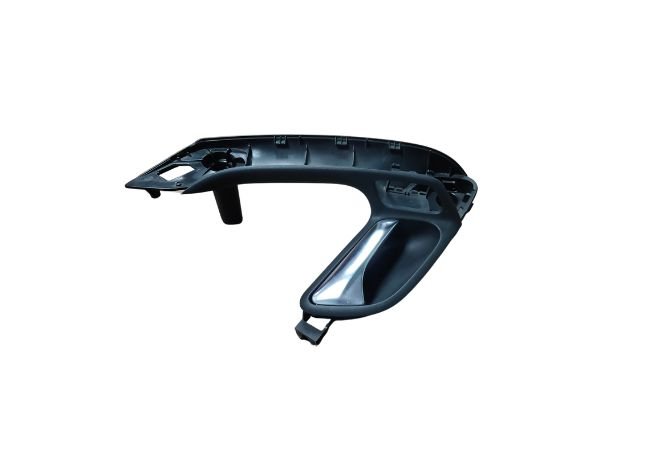
The interior handle is typically made from high-strength ABS or polycarbonate materials, designed for both strength and a premium feel. This component, produced through plastic injection molding, is engineered for durability, ensuring long-lasting use even in high-traffic areas like doors. The material offers resistance to scratching and fading, maintaining its appearance over time. Its ergonomic design ensures comfort and ease of use, making it an essential part of interior functionality while complementing the vehicle’s overall interior style.

The engine air intake manifold is crafted from high-performance polymers or aluminum to handle high temperatures and resist chemical corrosion. Using plastic injection molding or die casting, this part is designed to optimize airflow to the engine, improving fuel efficiency and overall performance. The material properties ensure that the intake manifold withstands the intense pressures of engine operation while maintaining structural integrity for prolonged engine life and enhanced power output.
For More Information
If you need further details or have any questions, feel free to contact us. Our team is here to provide expert advice and support to help you find the perfect solutions for your automotive parts and mold manufacturing needs.
-

The engine air intake manifold is typically made from high-performance plastics or aluminum to handle high temperatures and resist corrosion. Manufactured using plastic injection molding or die casting, it is designed to optimize airflow, enhancing engine performance and fuel efficiency. The material choice ensures durability, strength, and heat resistance, essential for maintaining the engine’s functionality and longevity under varying conditions. This component plays a vital role in regulating airflow to the engine, ensuring smoother operation and improved power output.
-
 Door Trim Panel
The door trim panel is crafted from impact-resistant plastic or composite materials to ensure durability and flexibility. Produced through plastic injection molding, it is designed for precise fitment and a premium finish, resistant to UV degradation and scratches. This part enhances the vehicle’s interior aesthetics while providing excellent noise reduction and comfort. The high-quality material offers both flexibility and strength, ensuring that the door trim panel maintains its integrity and appearance over the long term, even in high-use areas of the vehicle.
-
 Air Intake Hose
The air intake hose is usually made from reinforced rubber or flexible plastic compounds such as silicone or EPDM. Manufactured through extrusion and injection molding, the hose is designed to withstand high temperatures, vibrations, and environmental stress. Its main function is to channel air to the engine’s intake system, ensuring optimal airflow for combustion. The material’s flexibility allows for easy installation while providing the required resistance to wear, chemical exposure, and engine heat. This ensures long-lasting performance and reliability under demanding conditions.
-
 Door Pull Handle Trim Cover
The door pull handle trim cover is typically crafted from high-quality ABS or polycarbonate for strength and aesthetic appeal. Using plastic injection molding, this part is designed for precision, offering a smooth, durable surface resistant to UV damage and wear. It not only provides a sleek and ergonomic design but also enhances the durability of the door handle area. The high-impact resistant material ensures the trim cover withstands daily handling, maintaining both form and function throughout the life of the vehicle.
-
 Automotive Injection Molded Parts
Automotive injection molded parts are made from a variety of high-performance materials, including ABS, PC, PA, and polypropylene. These parts are produced using precise injection molding processes, ensuring high-quality, durable components. Injection molding allows for the creation of complex geometries with tight tolerances, providing both strength and lightweight characteristics, ideal for automotive applications. From structural components to interior fittings, these molded parts are engineered to meet the stringent demands of the automotive industry, ensuring performance, safety, and longevity.
Special Injection Mold Case at BillowPeak
-
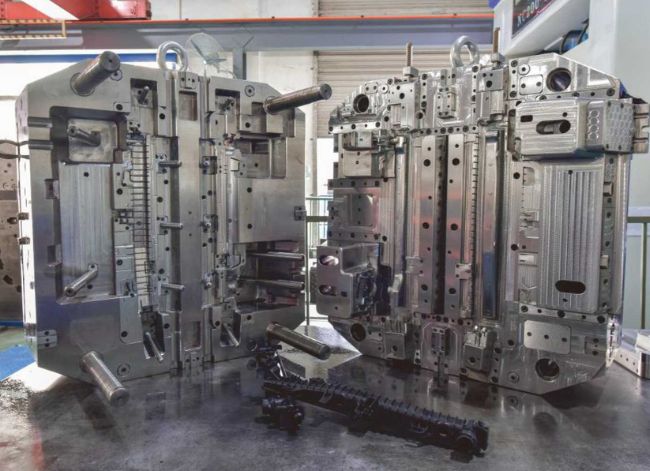
Steel: Hardened H13 (HRC 50-54) with multi-stage tempering for thermal fatigue resistance in high-cycle production.
Plastic: UV-stabilized PC/PBT blend (30% GF) ensuring dimensional stability (±0.08mm) under hood temperatures.
Process: 3D-printed conformal cooling channels maintain 85°C±2°C mold temp, eliminating sink marks on ribbed structures. Keywords: Automotive Injection Mold, plastic automotive components, automotive plastic parts manufacturers -
 Automotive Injection Mold for Soft-Touch Dashboard Panels
Steel: Polished NAK80 (HRC 40) with laser-engraved leather-grain texture (VDI 3400 standard).
Plastic: TPE-E/PP hybrid (Shore A 65) for seamless overmolding on ABS substrates.
Process: Microcellular foaming achieves 15% weight reduction while hiding clamp marks. -

Steel: Maraging steel (1.2709) with nitrided cores to withstand abrasive PA6-GF35 (50% glass fiber).
Plastic: Hydrolysis-resistant PA66 for 150°C continuous exposure, with gas-assist channels reducing weight by 25%.
Process: Sequential valve gating controls fiber orientation, optimizing burst pressure to 8 bar.
WHY BillowPeak?

our engineering team have more than 10 years experiences

most of the equipments are imported from Japan

we provide from concept design to come to truth one stop service

we keep in touch with customers after received the molds
Advanced Manufacturing Technology
Our company prides itself on utilizing cutting-edge manufacturing technologies that ensure precision, efficiency, and high-quality production. From advanced CNC machining to automated injection molding systems, our facilities are equipped with state-of-the-art machinery to deliver reliable, high-performance products. With these capabilities, we can meet the most demanding industry standards, ensuring that our clients receive products that exceed their expectations, while improving production timelines and cost-effectiveness.


Skilled and Experienced Team
At the core of our operations is a team of highly skilled professionals with years of experience in die casting, injection molding, and product design. Our engineers and technicians bring a wealth of expertise to every project, ensuring that each product is crafted with precision and attention to detail. This dedicated team, combined with continuous training and technical innovation, assures clients that their needs will be met with the highest standards of quality, reliability, and professionalism.
Proven Quality Assurance and Compliance
We are committed to delivering flawless products through stringent quality control processes. From rigorous testing to compliance with international standards such as ISO 9001 and IATF 16949, our robust quality assurance procedures ensure that every part we produce meets the highest performance and safety standards. This commitment to quality not only builds trust but also guarantees that clients receive durable, reliable, and precise products that perform consistently in real-world conditions.

Injection Mold Manufacturing Department


At BillowPeak, we stand as a trusted plastic moulding parts manufacturer, delivering high-quality injection molding automotive parts for the automotive sector. With deep expertise in the plastic injection moulding industry, we cater to automotive plastic manufacturers, ensuring precision and durability in every part. Our advanced injection molding process produces components like the grille dashboard that meet the stringent standards of the automotive industry. As reliable automotive plastics manufacturers, we are committed to providing cost-effective, high-performance solutions that drive efficiency and innovation for our clients.
People Also Ask
Injection molding is a manufacturing process where molten plastic is injected into a mold to form products, then cooled and solidified for final use. It’s efficient and widely used for mass production.
A simple injection mold typically costs between $1,000 to $5,000, depending on complexity, size, and material. More intricate molds with multiple cavities or special features can cost significantly more.
Both “injection mold” (American English) and “injection mould” (British English) are correct. The difference lies in regional spelling, with “mold” used in the U.S. and “mould” in the U.K. and other countries.
Injection molding can be costly for small production runs due to high initial mold costs. It’s also limited to certain materials and may have issues with part defects, like warping or uneven cooling.
An injection mold technician sets up, operates, and maintains injection molding machines. They troubleshoot mold issues, ensure proper temperature and pressure, and inspect parts for quality during production.
The lifespan of an injection mold depends on factors like material, usage, and maintenance, but it typically lasts between 500,000 to 1 million cycles. Proper care can extend its life, while neglect can shorten it.
The most commonly used injection mold is the single-cavity mold, which produces one part per cycle. It’s cost-effective for small to medium production runs and is widely used for manufacturing simple parts.
The best plastic for injection molding depends on the application, but common choices include ABS, polypropylene (PP), and polycarbonate (PC). ABS offers durability, PP is lightweight and chemical-resistant, and PC is strong and heat-resistant.
6 Key Industries Using Automotive Injection Molds

Automotive injection molds play a crucial role in producing exterior components like bumpers, grilles, side mirrors, and lighting housings. These parts require precision, impact resistance, and high durability, making injection molding ideal for creating lightweight yet robust exterior automotive parts that withstand harsh weather and physical stress.

The automotive injection mold process is widely used to produce dashboard panels, center consoles, trim parts, and door handles. These components require materials like ABS, PC, and polypropylene that offer durability, resistance to UV degradation, and excellent finish quality. Injection molding ensures consistent precision for high-volume production.

Injection molded automotive parts are essential in the production of engine covers, intake manifolds, and fuel system components. Using high-performance plastics, these molds provide strength, heat resistance, and the ability to handle high-pressure environments. Injection molding delivers parts with exacting tolerances that support engine efficiency.

For electrical connectors, fuse boxes, and cable insulations, automotive injection molds are used to create parts that require high electrical insulation and durability. The precision molding process ensures that these components meet strict performance standards, particularly in high-voltage systems.
Parts like airbag housings, seatbelt components, and brackets are essential for vehicle safety. Automotive injection molding ensures that these parts are produced with tough, impact-resistant materials that provide strength, durability, and precise design. The process ensures high-performance safety components that meet rigorous standards.

Components like radiator parts, coolant tanks, and reservoirs are made using automotive injection molds. These components are produced from materials that offer chemical resistance, strength, and flexibility. The injection molding process ensures that parts fit perfectly and are resistant to the harsh fluids they must handle, contributing to overall vehicle performance.

Related Product


Automotive injection molding is a process used to create high-quality plastic parts for vehicles. It involves injecting molten plastic into molds to produce durable, precise components for cars, trucks, and other vehicles. This method ensures efficiency in mass production and allows for intricate designs, making it ideal for the automotive industry.
Roto molding (rotational molding) and injection molding are both plastic manufacturing processes but differ in their methods and applications.
In rotational molding, plastic powder is placed inside a mold, which is then heated and rotated around two axes. The plastic melts and coats the mold’s interior, forming hollow parts. This process is ideal for producing large, hollow items like tanks, containers, and playground equipment.
In injection molding, molten plastic is injected into a mold under high pressure, filling the cavity to create solid parts. It is commonly used for producing smaller, high-precision components such as automotive parts, electronics, and household items.
The main differences lie in the type of products they create (hollow vs. solid) and the process (rotating vs. injecting).
Yes, injection molding can be a great career choice, especially for those interested in manufacturing, engineering, and design. The field offers several benefits:
-
High Demand: Injection molding is widely used in industries like automotive, electronics, consumer goods, medical devices, and packaging, making skilled professionals in this field highly sought after.
-
Job Stability: As an essential manufacturing process, injection molding remains a critical part of modern production, offering long-term job stability.
-
Diverse Opportunities: Careers in injection molding span across various roles such as mold design, process engineering, quality control, and machine operation, providing flexibility for career growth.
-
Technological Advancements: The industry continues to innovate with new materials and techniques, offering professionals opportunities to work with cutting-edge technologies.
-
Competitive Salary: Many positions in the injection molding field offer competitive salaries, particularly for those with specialized skills or experience in the industry.
Overall, for those interested in manufacturing, problem-solving, and innovation, injection molding can provide a rewarding and stable career path.
The lifespan of an injection mold depends on several factors, including the material of the mold, the type of plastic being used, the complexity of the mold design, and the production conditions. On average, a well-maintained injection mold can last between 500,000 to 1 million cycles.
Factors that influence mold lifespan include:
-
Material of the Mold: High-quality steel molds tend to last longer than those made from less durable materials.
-
Type of Plastic: Harsh or abrasive materials may wear the mold faster than less abrasive plastics.
-
Maintenance: Regular maintenance, cleaning, and timely repairs can extend the mold’s life.
-
Production Volume: The higher the number of cycles (production runs), the more wear and tear on the mold.
-
Design and Cooling Systems: Well-designed molds with efficient cooling systems typically last longer.
Proper maintenance and optimization of production processes can help extend the mold’s lifespan and ensure consistent performance.
Qualifications Needed for Injection Molding Operator:
To become an injection molding operator, you typically need:
a. A minimum diploma in Mechanical Engineering or Tool & Die Making.
b. Having the above educational qualifications can provide an advantage in securing internship or trainee operator positions at injection molding companies.
The hourly rate for injection molding can vary widely depending on several factors, such as the location, the complexity of the part being produced, the type of plastic used, and the experience of the professionals involved.
Generally, the cost for injection molding services ranges from $60 to $190 per hour, with more precise or specialized work possibly going higher. This range typically includes the machine setup, labor, and overhead costs, but does not necessarily include mold costs, raw materials, or additional services like quality control or post-processing.
For more accurate pricing, it’s best to request quotes from specific molders, as prices can fluctuate based on project specifics, production volume, and contract terms.
One disadvantage of injection molding is the high initial cost for mold creation. The design and manufacturing of molds can be expensive, especially for complex parts or large volumes. While injection molding is cost-effective for high-volume production, the upfront costs may not be justified for small runs or prototypes, making it less suitable for low-volume or custom orders.


