


Durable, Precise & Versatile: The Power of Polycarbonate Injection Molding
Polycarbonate injection molding is a highly efficient manufacturing process used to produce strong, transparent, and heat-resistant polycarbonate parts. Thanks to its outstanding mechanical properties, injection molding polycarbonate is widely adopted in industries such as automotive, electronics, and medical devices. The ability to achieve complex shapes with tight tolerances makes PC injection molding a preferred choice for precision components.
As an experienced polycarbonate injection molding manufacturer, we focus on optimizing process parameters to ensure high-quality injection molded polycarbonate parts. Proper temperature control and mold design are critical in molding polycarbonate, as they minimize internal stresses and maintain optical clarity when needed. Whether for impact-resistant housings or high-temperature applications, polycarbonate plastic injection molding delivers reliable performance.
Compared to other thermoplastics, polycarbonate injection molding requires strict moisture control and precise injection settings to avoid defects like warping or voids. Innovations in PC injection molding have expanded its use in flame-retardant, electrically insulating, and UV-stable components. By combining advanced technology with material expertise, manufacturers can produce durable and cost-effective polycarbonate parts for demanding applications.
From prototyping to mass production, polycarbonate injection molding remains a trusted method for creating high-performance, long-lasting components across multiple industries.
Polycarbonate Injection Molding Solution Cases
Polycarbonate (PC) Injection Molding Parameters Reference Table
| PC Grade | Shrinkage (‰) | Flowability | Melt Temp. (°C) | Mold Steel | Core Hardness (HRC) | Mold Temp. (°C) | Surface Finish | Typical Applications |
|---|---|---|---|---|---|---|---|---|
| Standard PC | 5~7 | Moderate | 280~320 | NAK80, S136 | 52~56 | 80~120 | Glossy/Matte | Electronics enclosures, consumer products |
| High-Flow PC | 5~7 | Excellent | 260~300 | 718H, P20 | 48~52 | 60~100 | High Gloss | Thin-wall parts, complex geometries |
| High-Temp PC | 6~8 | Moderate | 300~340 | H13, 2344 | 54~58 | 100~140 | Scratch-resistant/Matte | Automotive lenses, high-temp components |
| Flame-Retardant PC | 5~7 | Poor | 290~330 | S136, SKD61 | 50~54 | 80~110 | Low Gloss/No Flow Marks | Electrical switches, sockets |
| Optical PC | 4~6 | Moderate | 270~310 | Mirror Polish (NAK80) | 52~55 | 90~120 | Defect-free/Polished | Lenses, transparent displays |
| Glass-Filled PC | 2~4 | Poor | 300~340 | Tool Steel (2344) | 56~60 | 100~130 | Textured/Matte | Structural parts, automotive components |

Our polycarbonate injection molding process delivers high-clarity, impact-resistant lenses and protective eyewear. Ideal for safety goggles, visors, and optical components where transparency and durability are essential.

We offer custom polycarbonate injection molding for electronic housings, plugs, switches, and connectors. PC materials ensure excellent insulation, dimensional stability, and flame resistance for critical electronic applications.

Polycarbonate injection molding is widely used in automotive applications for its strength and heat resistance. Perfect for light covers, dashboards, and interior trims that demand both toughness and design flexibility.
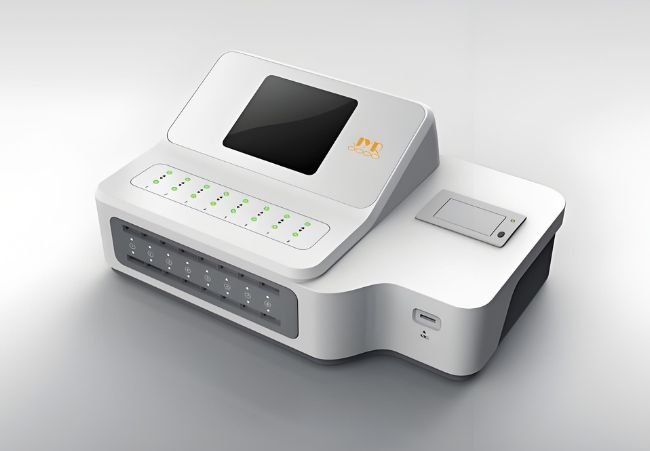
Our medical-grade polycarbonate injection molding solutions meet strict hygiene and performance standards. Ideal for diagnostic equipment, device housings, and transparent components used in clinical environments.

Polycarbonate injection molding ensures food-safe, BPA-free performance for baby bottles, drinking cups, and kitchen containers. PC’s clarity, toughness, and heat resistance make it a trusted material for food-related products.

We manufacture durable polycarbonate injection molding parts for industrial machinery and automation. PC components offer superior impact resistance and visibility, perfect for safety covers, panels, and viewing windows.
Why Billowpeak For Your Lsr Injection Molding ?

- Tight Tolerance Control: Capable of achieving ±0.01mm tolerances for critical PC parts (e.g., optical components, medical devices).
- Advanced Process Monitoring: Real-time IoT-enabled systems ensure stable melt temperature (±1°C) and injection pressure control, reducing defects like sink marks or warpage.
- Example: Produced 500,000+ defect-free automotive lens housings annually for Tier 1 suppliers.

- PC Grade Specialization: Deep knowledge in processing optical-grade PC, flame-retardant PC (UL94 V0), and glass-filled PC (up to 40% GF).
- In-House Material Testing: Lab-equipped to validate impact strength (ISO 180), transmittance (ASTM D1003), and thermal stability (HDT @ 1.82MPa).
- Value Add: Co-developed a 20% lighter PC/ABS blend for drone housings without sacrificing structural integrity.

- Tooling Efficiency: Proprietary conformal cooling channel designs reduce cycle times by 15–20% vs. conventional molds.
- Lean Manufacturing: Automated degating and inline inspection cut labor costs by 30% for high-volume orders.
- Case Study: Saved a client $0.22/part on a 2M-unit annual order through gate optimization and regrind recycling.

- Certifications: ISO 13485 (medical), IATF 16949 (auto), and FDA-compliant PC resins.
- DFM Collaboration: Free Design for Manufacturability (DFM) reports within 48 hours, highlighting draft angles, wall thickness, and ejection risks.
- Supply Chain Transparency: Full material traceability (from resin lot numbers to mold maintenance logs).
Unmatched Durability & Impact Resistance
Polycarbonate injection molding produces polycarbonate parts with exceptional toughness, making them ideal for high-impact applications. Unlike standard plastics, injection molded polycarbonate offers 250x the impact strength of glass and 30x that of acrylic, ensuring long-term reliability in automotive, electronics, and safety gear. As a leading polycarbonate injection molding manufacturer, we optimize mold designs to enhance structural integrity, reducing part failure in demanding environments. Whether for polycarbonate plastic injection molding of protective housings or medical devices, PC’s resilience ensures superior performance under stress.


Optical Clarity & Precision for High-Performance Components
Injection molding polycarbonate delivers crystal-clear transparency with light transmission up to 90%, rivaling glass without the brittleness. This makes molding polycarbonate perfect for lenses, displays, and LED covers. Our PC injection molding process minimizes internal stresses and flow marks, ensuring optical-grade finishes. With precise polycarbonate injection molding techniques, we achieve micron-level accuracy for complex geometries, meeting strict industry standards in aerospace and medical optics.
Heat & Chemical Resistance for Extreme Environments
Polycarbonate plastic injection molding creates parts that withstand continuous temperatures up to 135°C and resist oils, acids, and UV degradation. This thermal stability makes injection molded polycarbonate ideal for automotive under-hood components, electrical insulators, and industrial machinery. As a trusted polycarbonate injection molding manufacturer, we use advanced molding polycarbonate techniques to prevent warping or degradation, ensuring dimensional stability in harsh conditions. From flame-retardant enclosures to chemical-resistant lab equipment, PC injection molding ensures longevity where other plastics fail.

Why Choose Our Polycarbonate Injection Molding Capabilities?


1. Superior Material Performance for Demanding Applications
As a leading polycarbonate injection molding manufacturer, we specialize in producing high-performance polycarbonate parts that outperform conventional plastics. Our PC injection molding process leverages polycarbonate’s unique properties—including impact strength 250x greater than glass, heat resistance up to 135°C, and natural UV stability—to create durable components for automotive, medical, and electronics industries. Whether you need optical-grade clarity for lenses or flame-retardant (UL94 V0) housings for electrical applications, our injection molding polycarbonate expertise ensures optimal material performance in your final product.
2. Precision Engineering for Complex Geometries
Our advanced molding polycarbonate capabilities enable us to manufacture tight-tolerance (±0.01mm) components with intricate designs. Unlike traditional methods, our injection molded polycarbonate process utilizes scientific molding techniques, conformal cooling channels, and high-precision tooling to minimize warpage and internal stresses. This results in highly consistent polycarbonate parts—from micro-sized medical components to large automotive light guides—with superior dimensional stability and surface finish.
3. Cost-Effective, High-Volume Production Solutions
We optimize polycarbonate plastic injection molding for efficiency without compromising quality. Our automated production lines and regrind recycling programs reduce waste and lower per-part costs, making us the ideal partner for high-volume orders. Additionally, our in-house tooling design team ensures faster cycle times and extended mold life, providing long-term savings. From prototyping to mass production, our PC injection molding services deliver high-quality, affordable solutions tailored to your project requirements.
Partner with a Trusted Polycarbonate Injection Molding Expert
With decades of experience in injection molding polycarbonate, we combine material expertise, precision manufacturing, and cost efficiency to deliver superior results. Contact us today to discuss your project and receive a free DFM analysis!
Advanced Processing Equipment for Superior Polycarbonate Injection Molding

As a leading polycarbonate injection molding manufacturer, we invest in cutting-edge mold-making technology to ensure flawless PC injection molding results. Our facility is equipped with 5-axis CNC machining centers, high-speed EDM (electrical discharge machining), and ultra-precision grinding machines capable of achieving <0.005mm tolerance. We utilize hardened tool steels (H13, S136, NAK80) and conformal cooling channels to optimize thermal management, reducing cycle times while maintaining dimensional stability. For optical-grade polycarbonate parts, we employ mirror-polishing and diamond-cutting techniques to achieve Ra <0.01µm surface finishes. Our mold maintenance program guarantees 500,000+ shot durability even for glass-filled PC compounds.

Our injection molding polycarbonate production lines feature all-electric and hybrid presses (50-2000T) with closed-loop pressure control for exceptional repeatability. Advanced barrel temperature zones (±1°C accuracy) and moisture-controlled drying systems prevent material degradation during polycarbonate plastic injection molding. For complex applications, we utilize multi-shot and overmolding capabilities to combine PC with other engineered resins. Real-time IoT-enabled monitoring tracks critical parameters (melt viscosity, cushion size, cooling rate) to ensure consistent quality across high-volume production runs. Our auxiliary equipment includes automated robotic part handling, laser marking systems, and 100% inline optical inspection for defect-free injection molded polycarbonate components.
5 Key Application Fields of Polycarbonate Injection Molding

Polycarbonate injection molding is widely used in automotive manufacturing due to its impact resistance, lightweight properties, and thermal stability. Key applications include headlight lenses, instrument panels, and interior trim, where optical clarity and durability are critical. PC injection molding also produces shatter-resistant glazing for sunroofs and windows, meeting stringent safety standards. With UV-resistant grades, these polycarbonate parts withstand long-term outdoor exposure without yellowing or degradation, making them ideal for electric vehicle battery housings and charging components.

The electronics industry relies on injection molding polycarbonate for flame-retardant (UL94 V0/V2) housings, connectors, and switchgear. Polycarbonate plastic injection molding ensures high dielectric strength, protecting sensitive circuits from short circuits and EMI interference. Common applications include smartphone casings, power tool housings, and server components, where heat resistance (up to 130°C) and dimensional stability are essential. Additionally, PC injection molding enables thin-wall designs for compact, lightweight consumer electronics without sacrificing strength.

Medical-grade injection molded polycarbonate is biocompatible, sterilizable (autoclavable), and chemically resistant, making it ideal for surgical instruments, IV connectors, and diagnostic device housings. Polycarbonate injection molding ensures transparency for fluid monitoring and impact resistance for drop-proof designs. Due to its low particulate shedding, PC is also used in cleanroom-compatible equipment and disposable medical components, meeting FDA and ISO 13485 compliance requirements.

From safety goggles and face shields to riot helmets and ballistic shields, molding polycarbonate provides unmatched impact protection while maintaining optical clarity. Unlike glass or acrylic, PC injection molding produces lightweight yet high-strength protective gear that meets ANSI Z87.1 and EN166 safety standards. The material’s inherent UV resistance also makes it suitable for welding masks and firefighter visors, ensuring long-term durability in extreme conditions.

Polycarbonate plastic injection molding is the preferred method for manufacturing LED light diffusers, street lamp covers, and optical lenses due to its 90%+ light transmittance. Injection molding polycarbonate allows for precise light control with minimal distortion, making it ideal for automotive headlights, traffic signals, and camera lenses. Specialty grades with anti-fog and anti-reflective coatings further enhance performance in demanding environments.
Related Product


Polycarbonate Injection Molding FAQs
Get quick answers to common questions about molding durable, high-performance polycarbonate (PC) parts. Learn about processes, challenges, and solutions from the experts.
Absolutely! Polycarbonate (PC) is one of the most versatile thermoplastics for injection molding, thanks to its unique combination of strength, clarity, and heat resistance. The PC injection molding process involves melting the material at 280–320°C and injecting it into precision molds to create complex, high-performance parts. Key advantages include:
- Exceptional Impact Resistance – Ideal for safety gear, automotive lenses, and electronics.
- Optical Clarity – Used in transparent components like medical devices and LED covers.
- Heat & Chemical Resistance – Withstands harsh environments without warping.
At BillowPeak, we optimize molding parameters (temperature, pressure, cooling) to ensure dimensional stability and superior surface finishes. Whether prototyping or mass production, polycarbonate injection molding delivers durable, precision-engineered parts.
While polycarbonate injection molding offers exceptional performance, it presents unique challenges that require expertise to overcome:
- Moisture Sensitivity
PC resin absorbs moisture rapidly, leading to bubbles, splay marks, or degraded mechanical properties if not properly dried (typically 4+ hours at 120°C). - High Processing Temperatures
Exceeding 320°C can cause thermal degradation, while insufficient heat leads to poor flow. Precise barrel temperature control (±2°C) is critical. - Internal Stresses & Warpage
Due to PC’s low shrinkage (0.5–0.7%), uneven cooling or improper gate design may cause residual stresses, requiring optimized mold design and annealing processes.
At BillowPeak, we mitigate these issues through dedicated drying systems, scientific molding protocols, and stress-relief treatments to ensure flawless injection molded polycarbonate parts. [Ask our engineers] for tailored solutions!
Yes, polycarbonate (PC) is exceptionally well-suited for injection molding and is widely used across industries due to its superior material properties. The process involves heating PC pellets to 280–320°C and injecting them into precision molds under high pressure to form complex, high-performance parts.
Key Advantages of PC Injection Molding:
- High Impact Strength – PC is virtually unbreakable, making it ideal for safety gear, automotive components, and electronic housings.
- Optical Clarity – With 90%+ light transmission, PC is preferred for lenses, light guides, and transparent covers.
- Heat & Chemical Resistance – Retains structural integrity at temperatures up to 135°C and resists oils, acids, and UV radiation.
Why Choose PC Injection Molding?
At billowpeak , we specialize in overcoming PC’s challenges (like moisture sensitivity and warpage) through advanced drying systems, precision mold design, and optimized cooling processes. Whether you need optical-grade clarity or glass-reinforced toughness, our PC injection molding capabilities deliver consistent, high-quality results.
[Contact Us] to discuss your project requirements!
Polycarbonate (PC) is a high-performance thermoplastic ideal for injection molding, but it requires precise processing to achieve optimal results. Here’s a step-by-step guide to molding PC effectively:
1. Material Preparation
- Drying PC Resin – Polycarbonate is highly hygroscopic (absorbs moisture). Pre-dry pellets for 4–6 hours at 120°C (248°F) to prevent bubbles, splay marks, or strength loss.
- Hopper Blanketing – Use a dehumidifying dryer with nitrogen purging to maintain moisture levels below 0.02%.
2. Injection Molding Machine Setup
- Barrel Temperature – Maintain 280–320°C (536–608°F) for optimal melt flow. Avoid exceeding 340°C (644°F) to prevent degradation.
- Screw Design – Use a low-compression (2:1) screw to reduce shear heating and material breakdown.
- Mold Temperature – Keep between 80–120°C (176–248°F) to minimize internal stresses and improve surface finish.
3. Injection & Cooling Process
- Injection Speed – Moderate-to-fast injection prevents premature cooling but avoids excessive shear stress.
- Holding Pressure – Apply 50–80% of injection pressure to reduce sink marks and warpage.
- Cooling Time – Longer cooling (vs. other plastics) ensures dimensional stability due to PC’s high glass transition temperature (147°C/297°F).
4. Post-Molding Considerations
- Annealing (for Stress Relief) – Heat parts at 110–130°C (230–266°F) for 1–4 hours to enhance toughness.
- Surface Treatments – PC can be polished, coated (anti-scratch, UV-resistant), or metallized for specialized applications.
Common Pitfalls & Solutions
- Warpage? → Optimize cooling channels & ejector pin placement.
- Bubbles? → Extend drying time or reduce melt temp.
- Poor Flow? → Increase mold temperature or adjust gate design.
At billowpeak , we specialize in high-precision PC injection molding, leveraging advanced equipment and process controls to overcome these challenges. [Contact us] for a free project review!
Yes! Polycarbonate (PC) requires heat for molding (280-320°C). Key points:
- Processes – Injection molding (most common), extrusion, thermoforming
- Why Heat Works – PC softens when heated but won’t degrade if properly controlled
- Must-Do’s – Pre-dry pellets (120°C/4hrs), control temp precisely, anneal after molding
- Results – Strong, clear parts like safety gear, medical devices, car lights
We specialize in precision PC molding with perfect heat control. [Contact us] for flawless parts!


