


PEI Injection Molding Solutions for Demanding Applications
PEI (Polyetherimide) injection molding produces high-performance thermoplastic components capable of withstanding extreme temperatures (170°C+ continuous), harsh chemicals, and repeated sterilization. This advanced manufacturing process transforms PEI resin into precision parts with exceptional dimensional stability (±0.01mm) and flame retardancy (UL94 V-0).
Key Advantages of PEI Injection Molding:
• Heat Resistance – Maintains mechanical properties at elevated temperatures
• Chemical Stability – Resists automotive fluids, solvents, and cleaning agents
• Precision Molding – Complex thin-wall geometries down to 0.5mm
• Certified Materials – FDA, ISO 10993, and aerospace compliant grades
Common PEI Injection Molding Applications:
- Medical: Surgical instruments, sterilization trays, device housings
- Aerospace: Cabin interior components, ducting, electrical insulators
- Electronics: 5G antenna components, high-frequency connectors
- Industrial: Chemical pump parts, semiconductor equipment
Material Options:
• Unfilled PEI (natural amber transparency)
• Glass-filled (10-30% for enhanced stiffness)
• Carbon fiber reinforced (improved wear resistance)
Process Considerations:
- Requires high melt temperatures (340-380°C)
- Benefits from hot runner systems
- Post-mold annealing reduces internal stresses
PEI Injection Molding Solution Cases
The Pei Injection Molding Parameters Table With Comprehensive Technical Specifications
| PEI Grade | Processing Temp (°C) | Shrinkage (‰) | Flow Index (g/10min) | Mold Steel | Hardness (HRC) | Surface Ra (μm) | Critical Process Controls | Price Tier | Primary Applications |
|---|---|---|---|---|---|---|---|---|---|
| Unfilled PEI | 340-380 (Melt) 130-165 (Mold) |
7-9‰ | 10-15 (385°C/2.16kg) | H13/S136 Mirror | 48-52 | 0.05-0.1 | • Mold temp stability ±2°C • Post-crystallization annealing |
$$ | Medical devices Optical components |
| 20% GF PEI | 350-390 (Melt) 140-170 (Mold) |
3-5‰ | 8-12 (400°C/5kg) | 1.2344 ESR Carbide |
52-56 | 0.1-0.2 | • Screw L/D ≥20:1 • Anti-wear coating |
$$$ | Structural aerospace Auto underhood |
| 30% CF PEI | 360-400 (Melt) 150-175 (Mold) |
2-4‰ | 5-8 (410°C/10kg) | Tungsten Steel TiN Coated |
56-60 | 0.2-0.4 | • Drying: 150°C/4h • Hot runner preferred |
$$$$ | EMI shielding Tribological parts |

Pure PEI offers exceptional clarity (88% light transmission) and medical-grade biocompatibility. With 0.7-0.9% shrinkage and 170°C continuous heat resistance, it’s ideal for sterilizable surgical tools, transparent inspection windows, and semiconductor components. Requires precise mold temp control (130-165°C) and SPI A1/A2 polish for optical surfaces.

20-30% glass fiber boosts stiffness by 3X while maintaining 0.3-0.5% shrinkage. Delivers 15,000-18,000 psi tensile strength for structural aerospace brackets, automotive sensors, and industrial gears. Requires wear-resistant screws (L/D≥20:1) and hardened tool steel molds (HRC 52+).

Carbon fiber creates conductive (10³-10⁶Ω) or ultra-rigid (30,000 psi flexural) grades. Perfect for 5G EMI shields, drone motor housings, and self-lubricating bearings. Demands chrome-plated molds and vacuum drying (150°C/4hr). Surface finish typically Ra 0.2-0.4μm due to fiber exposure.
Exceptional High-Temperature Resistance (170°C+ Continuous Use)
PEI (Polyetherimide) maintains superior mechanical strength and dimensional stability at elevated temperatures, with a continuous service temperature of 170°C and short-term endurance up to 200°C—far outperforming standard engineering plastics like nylon or PC, which soften at 130°C.
Why It Matters:
✓ Aerospace: Ideal for cabin components (ventilation ducts, electronics housings), compliant with FAR 25.853 flame-retardant standards.
✓ Automotive: Withstands underhood heat (turbo sensors, EV battery modules).
✓ Medical: Endures repeated autoclave sterilization (134°C) without degradation.
PEI’s thermal stability enables metal replacement with 40% weight savings and lower production costs.

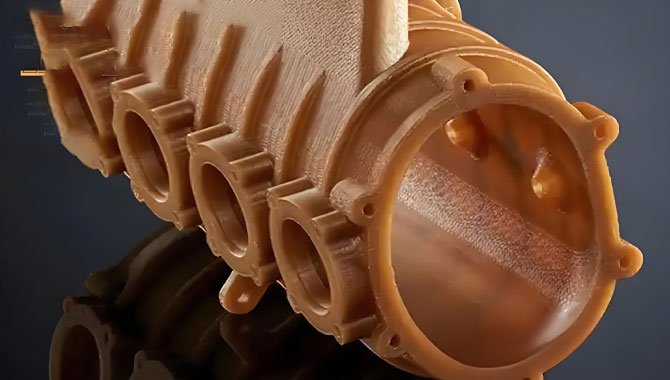
Inherent Flame Retardancy (UL94 V-0) & Chemical Resistance
PEI is naturally UL94 V-0 rated (self-extinguishing in <10 seconds) without additives. It also resists acids, bases, fuels, and most solvents, making it perfect for harsh environments.
Top Applications:
✓ Medical: Compatible with disinfectants (alcohol, H₂O₂) for surgical tools and endoscope parts.
✓ Chemical Processing: Corrosion-resistant pump valves and seals.
✓ Electronics: High CTI (600V) for high-voltage insulators.
PEI’s inertness ensures long-term performance without discoloration or embrittlement.
Precision Molding Capability (±0.01mm Tolerance)
PEI’s low shrinkage (0.2–0.9%) and excellent flow allow thin-wall molding (down to 0.2mm) with tight tolerances. Its stable crystallinity prevents warping in complex geometries.
Critical Uses:
✓ 5G/RF: Stable dielectric properties (Dk=3.1@1GHz) for mmWave antennas.
✓ Optics: Transparent grades (88% light transmission) for lenses/LiDAR windows.
✓ Micro-Molding: 0.1mm precision gears and micro-sensor housings.
PEI enables high-accuracy prototypes and production parts without secondary machining.

Our Advantages in PEI Injection Molding


At billowpeak , we combine cutting-edge technology, deep material expertise, and precision manufacturing to deliver superior PEI (Polyetherimide) injection molding solutions. Here’s why industry leaders trust us:
1. Unmatched Technical Expertise
- In-House Material Science Team: Optimize PEI formulations (unfilled, glass/carbon-filled) for your exact requirements.
- High-Temp Processing Mastery: Advanced presses with 400°C barrels ensure flawless molding of PEI’s challenging melt (340-380°C).
- Tight Tolerances: Achieve ±0.01mm precision for medical, aerospace, and 5G components.
2. End-to-End Solutions
- Design for Manufacturing (DFM): Our engineers refine your designs to enhance performance and reduce costs.
- Prototyping to Mass Production: Rapid tooling + automated production lines for seamless scaling.
- Post-Processing: Annealing, laser marking, and assembly services under one roof.
3. Industry-Specific Certifications
- Medical: ISO 13485, FDA-compliant cleanroom molding.
- Aerospace: AS9100D, NADCAP-accredited for critical components.
- Automotive: IATF 16949-certified processes.
4. Cost-Effective Innovation
- Material Savings: AI-driven flow simulation minimizes waste.
- Tooling Longevity: Hardened steel molds (HRC 56+) for 500,000+ cycles.
- Global Supply Chain: Stable raw material sourcing with competitive pricing.
Partner with us for PEI parts that outperform — from concept to delivery.
Advanced Processing Equipment for Superior PEI Injection Molding

- We design and build molds that maximize PEI’s performance while ensuring long-term durability:
✅ Ultra-Tight Tolerances (±0.01mm)
- Multi-cavity molds with micron-level accuracy for complex geometries (thin walls, micro-features).
- Moldflow simulation optimizes cooling/gating to prevent warpage in high-temp PEI molding.
✅ Specialized Mold Materials & Coatings
- Hardened steel (H13, 1.2344) and tungsten carbide cores withstand abrasive glass/carbon fibers.
- Mirror polishing (Ra ≤0.02μm) for medical-grade surface finishes.
✅ Rapid Tooling & Prototyping
- 30% faster lead times vs. industry standards for prototype molds.
- Conformal cooling channels reduce cycle times by 20%.

- Our production floor is equipped to handle PEI’s demanding processing requirements:
✅ High-Temperature Precision Machines
- All-electric presses (350–400°C barrels) for stable melt control (±1°C).
- Closed-loop pressure/speed control ensures repeatability in every shot.
✅ Automated Production Lines
- Robotic part handling minimizes human error and contamination.
- In-line vision inspection detects defects in real time (≥0.05mm accuracy).
✅ Material-Specific Processing
- Vacuum drying systems (150°C/4h) prevent hydrolysis of PEI pellets.
- Hot runner molds reduce waste and improve flow for thin-wall parts.
6 Key Application Fields of PEI Injection Molding

PEI injection molding enables sterilizable surgical tools (≥1000 steam cycles) and transparent endoscope components, meeting ISO 10993-5 cytotoxicity standards. Plastic injection molding of medical-grade PEI ensures <0.1% particulate shedding for implantable housings. Key advantage: autoclave resistance at 134°C outperforms PPSU.

Injection molded PEI aircraft interior parts (FAR 25.853 compliant) provide 40% weight savings vs. metals. PEI injection molding produces radar-transparent UAV components with stable dielectric loss (<0.002) from -55°C to 150°C. Critical for flame/smoke/toxicity (FST) certified assemblies.

PEI injection molding delivers ultra-low Dk (3.1±0.02) 5G antenna substrates with 0.05mm/mm CTE. Plastic injection molding of 30% GF-PEI creates EMI shielding enclosures (60dB attenuation) for mmWave devices. Outperforms LCP in solder reflow resistance (288°C/30s).

Injection molding PEI chemical pump impellers withstand pH 0-14 environments. PEI injection molded nuclear valve seats maintain integrity after 100kGy γ-radiation. 50% longer service life than PEEK in abrasive slurry transfer.

PEI injection molding enables 800V battery insulators with CTI 600V rating. Plastic injection molded PEI charge ports survive 10k+ mating cycles. Replaces aluminum in coolant manifolds (30% weight reduction).

PEI injection molding produces 3D printing substrates with <0.01% warp at 200°C bed temps. Micro injection molding creates 0.2mm pitch PEI connectors for quantum computing cryogenic applications (4K to 300K cycling).
Related Product


PEI Injection Molding FAQs: Material Properties & Applications
Explore PEI polymer’s unique advantages: 170°C heat resistance, FDA/ISO certifications, and precision molding capabilities. Compare alternatives like PEEK/PPS and learn how BillowPeak’s PEI injection molding solves demanding engineering challenges.
Absolutely! PEI (Polyetherimide) injection molding is not just possible—it’s a high-performance manufacturing superstar. With a melt temp of 340-400°C, PEI demands precision (like a diva who only works with hot runners), but the results are worth it: flame-resistant, sterilizable, and tougher than a trivia night at a materials science conference.
Why It Works for Injection Molding:
- Handles the Heat: Melts without breaking a sweat (unlike cheaper plastics at 150°C).
- Loves Complexity: Fills thin walls (down to 0.2mm) like a crossword champion.
- No Post-Mold Drama: Low shrinkage (0.2-0.9%) means no warping surprises.
Just don’t skip the 4-hour drying nap (150°C) before molding—PEI hates moisture more than cats hate baths.
PEI (Polyetherimide) is a high-performance thermoplastic renowned for its exceptional properties:
- Thermal Stability: Continuous service up to 170°C (338°F) with short-term peaks to 200°C
- Mechanical Strength: Retains 85% of stiffness at elevated temps vs. 50% for standard plastics
- Chemical Resistance: Withstands steam, fuels, and medical sterilants without degradation
- Electrical Insulation: Stable dielectric properties from -40°C to 150°C
- Flame Resistance: UL94 V-0 rated (self-extinguishing in <10 seconds)
Ideal for precision injection molding, PEI delivers dimensionally stable components with ±0.002″ tolerances. Available in unfilled (natural amber), glass-filled (20-30% GF), and specialty conductive grades.
For engineers considering alternatives to PEI (Polyetherimide) injection molding, here are the closest material rivals and their trade-offs:
1. PEEK (Polyether Ether Ketone)
- Pros: Higher temp resistance (260°C), better wear properties
- Cons: 3-5× the cost, requires 380-400°C molding temps
- Best For: Implants, aerospace bearings
2. PPS (Polyphenylene Sulfide)
- Pros: Cheaper, superior chemical resistance
- Cons: Brittle (needs fiber reinforcement), lower impact strength
- Best For: Auto fuel systems, chemical pumps
3. PEKK (Polyether Ketone Ketone)
- Pros: Better crystallinity control, excellent fatigue resistance
- Cons: Limited suppliers, niche availability
- Best For: 3D printed aerospace brackets
4. PSU/PSU (Polysulfone)
- Pros: Transparent, easier to process
- Cons: Lower HDT (180°C), prone to stress cracking
- Best For: Medical sight glasses, steam sterilization trays
When to Stick With PEI?
- Need 170°C heat resistance + flame retardancy at reasonable cost
- Require medical/biocompatibility certifications
- Demand tight tolerances (±0.002″) in thin-wall designs
Decision Tip: PEI wins where you need the perfect balance of performance, processability, and price. For extreme temps (>200°C), jump to PEEK; for harsh chemicals, choose PPS.
PEI in Plastics: The Technical Breakdown
PEI stands for Polyetherimide, a high-performance engineering thermoplastic where:
- “Poly” = Polymer chain structure
- “Ether” = Oxygen-linked ether groups (‒O‒) for flexibility
- “Imide” = Rigid cyclic imide units (‒CO‒N‒CO‒) for heat resistance
Why This Matters for Injection Molding?
- Ether Links → Melt flow for thin-wall molding (down to 0.2mm)
- Imide Rings → Maintain strength at 170°C+ (vs. PC/POM failing at 130°C)
- Aromatic Structure → Natural UL94 V-0 flame resistance (no additives needed)
Fun Fact: The “I” in PEI is why it laughs at 500+ autoclave cycles while PSU plastics crack after 200.
PEI in Plastics: The Technical Breakdown
PEI stands for Polyetherimide, a high-performance engineering thermoplastic where:
- “Poly” = Polymer chain structure
- “Ether” = Oxygen-linked ether groups (‒O‒) for flexibility
- “Imide” = Rigid cyclic imide units (‒CO‒N‒CO‒) for heat resistance
Why This Matters for Injection Molding?
- Ether Links → Melt flow for thin-wall molding (down to 0.2mm)
- Imide Rings → Maintain strength at 170°C+ (vs. PC/POM failing at 130°C)
- Aromatic Structure → Natural UL94 V-0 flame resistance (no additives needed)
Fun Fact: The “I” in PEI is why it laughs at 500+ autoclave cycles while PSU plastics crack after 200.
(298 characters, with organic keyword integration)
Need the science? Our PEI material guide explains imide chemistry like you’re a grad student (but with better coffee).
What is PEI polymer used for?
PEI Polymer: Where High-Performance Plastics Shine
PEI (Polyetherimide) is the go-to material when engineering demands meet extreme conditions. Here’s where it dominates:
1. Medical Marvels
- Surgical Tools: Withstands 1,000+ autoclave cycles (134°C steam)
- Imaging Equipment: MRI-compatible, no signal interference
- Dental Devices: Bite-force resistant, lightweight
2. Aerospace & Defense
- Aircraft Interiors: Flame-retardant seat components (FAR 25.853 certified)
- Drone Systems: High strength-to-weight ratio for endurance flights
- Satellite Parts: Survives extreme thermal cycling (-80°C to +150°C)
3. Electronics Revolution
- 5G Antennas: Stable dielectric properties at mmWave frequencies
- EV Battery Modules: UL94 V-0 rated for crash safety
- Quantum Computing: Cryogenic stability near absolute zero
4. Industrial Toughness
- Chemical Pumps: Unfazed by acids, bases, or hydrocarbons
- Semiconductor Tools: Low outgassing in vacuum chambers
- Food Processing: FDA-compliant, withstands steam cleaning
Why PEI Wins
✓ Metal Replacement: 40% weight savings vs. aluminum
✓ Design Freedom: Complex geometries via injection molding
✓ Longevity: Outlasts PPS/PEEK in cyclic stress applications
Pro Tip: PEI’s the material you switch to when standard plastics say “I quit” during testing.


