


Precision Die Casting Dies & Aluminum Parts Manufacturer
BillowPeak is a leading die casting manufacturer specializing in high-precision die casting dies and molds for industries requiring durable, complex die casting parts. With decades of expertise, we engineer performance-driven solutions for aluminum die casting alloys, zinc, and magnesium applications.
Our die casting factory integrates advanced mold design, simulation, and production to deliver consistent, high-quality die casting products. Whether you need aluminum injection molding for automotive components or intricate aluminum metal injection molding for electronics, we optimize every stage—from material selection (die casting aluminium alloys) to finishing.
As trusted die casting die manufacturers, we serve global clients with:
✔ ISO-certified processes
✔ Rapid prototyping & high-volume production
✔ Custom die casting molds for complex geometries
✔ Full supply chain support
Partner with BillowPeak—your reliable aluminum die casting manufacturer for precision, efficiency, and innovation.
Industry-Specific Die Casting Molds | Expert Aluminium Die Casting Supplier
BillowPeak specializes in high-precision die casting moulds for diverse industries, offering expert die casting mold design and die casting mold making solutions. As a trusted aluminium die casting supplier, we provide customized die casting dies for automotive, electronics, medical, aerospace, industrial equipment, and telecommunications applications.

The automotive industry relies on high-precision die casting dies to manufacture engine blocks, transmission housings, structural components, and lightweight aluminum parts. As a leading die casting mold supplier, BillowPeak ensures durability, tight tolerances, and cost-effective production for automotive applications.

Electronics manufacturers use die casting dies for heat sinks, enclosures, connectors, and shielding components. With advanced die casting mold design, BillowPeak delivers high-precision, lightweight, and thermally conductive parts that enhance durability, electromagnetic shielding, and performance in electronic devices.

The medical industry demands die casting dies for imaging devices, surgical tools, and medical housings that require biocompatibility, corrosion resistance, and extreme precision. BillowPeak specializes in high-quality die casting mold making, ensuring tight-tolerance and high-performance medical components.

Aerospace and defense applications require lightweight, high-strength die casting dies for aircraft brackets, structural supports, and military-grade enclosures. BillowPeak’s expertise in die casting mold making ensures superior strength, heat resistance, and compliance with stringent industry regulations.

Industrial machinery and heavy equipment depend on die casting dies for gear housings, motor enclosures, and machine components. As an experienced die casting supplier, BillowPeak provides robust, high-precision dies designed to enhance durability, performance, and manufacturing efficiency.

The telecommunications sector utilizes die casting dies for antenna mounts, network enclosures, and high-frequency shielding components. With advanced die casting mold design, BillowPeak ensures corrosion-resistant, precision-engineered solutions for optimal performance and long-term reliability.
How to Choose the Right Steel for Die Casting Die?
Selecting the right steel for die casting die is crucial for ensuring durability, precision, and cost-effectiveness in production. Die casting companies and die castings manufacturers rely on high-performance materials to withstand extreme temperatures and pressures. Common choices include H13 steel, known for its excellent heat resistance, and H11 steel, which offers superior toughness.
A trusted die casting manufacturer prioritizes steel selection to enhance mold lifespan and minimize defects. Die casting mold manufacturers consider factors such as thermal fatigue resistance, hardness, and wear resistance when choosing materials. The right aluminum die casting tools improve efficiency and reduce maintenance costs.
In die casting mold design, steel selection directly impacts product accuracy and cycle times. Premium-grade materials optimize die casting mold making, ensuring consistent performance. Advanced die casting mould solutions incorporate high-quality alloys to extend service life.
Proper die casting design also depends on selecting the right steel, as it influences cooling rates and part quality. Collaborating with experienced casting mold design experts ensures the best balance of durability and production efficiency for long-term success.
How to Choose the Right Die Casting Aluminum Alloy?
- Complex structures & high fluidity requirements → ADC12, A380
- High corrosion resistance needed → ADC10, AlSi9Mg
- High strength & toughness → A356, AlMg5Si2Mn
- Precision machining & weldability → A356, AlSi9Cu3
Summary:
ADC12 is the most common die-casting aluminum alloy, while A380 is better suited for high-strength applications. A356 is ideal for high-toughness and precision components. Selecting the right aluminum alloy optimizes product performance and production efficiency.
Key Requirements for Die Casting Alloys:
- Excellent fluidity
- Strong corrosion resistance
- High mechanical strength
- Good machinability
Comparative Table of Common Die Casting Aluminum Alloys
| Alloy | Composition | Key Properties | Typical Applications | Region |
|---|---|---|---|---|
| ADC12 (A383) | AlSi11Cu3 | Best fluidity, good corrosion resistance, dimensional stability | Auto parts (engine/transmission housings), electronics, appliances | Asia |
| A380 | AlSi8Cu3 | High strength, heat resistance, wear resistance | Auto structural parts, power tools, heat sinks | North America |
| ADC10 (~A360) | AlSi9Cu2(Fe) | Better strength & corrosion than ADC12 | Marine components, outdoor equipment | Asia |
| A356 | AlSi7Mg0.3 | High toughness, weldable, heat-treatable | Aerospace, auto suspension, bike frames | Global |
| AlSi9Cu3 (EN AC-46000) | AlSi9Cu3(Fe) | Good strength & thermal conductivity | Auto parts, electronics housings | Europe |
| AlSi9Mg (EN AC-43500) | AlSi9Mg | Superior corrosion resistance | Marine equipment, industrial valves | Europe |
| AlMg5Si2Mn (EN AC-51500) | AlMg5Si2Mn | High impact resistance | Auto chassis, motorcycle frames | Europe |
-

High-Temperature Strength & Crack Resistance
H13 (1.2344/SKD61) is the industry-standard die casting die steel, offering exceptional thermal fatigue resistance up to 600°C. Its optimized chromium-molybdenum-vanadium alloy composition ensures prolonged service life in aluminum/zinc die casting, with hardness up to 50-54 HRC after heat treatment. Key advantages include:
✓ Superior resistance to heat checking vs. H11
✓ 300,000+ shot lifespan in aluminum casting
✓ Excellent machinability pre-hardened (30-34 HRC)
Ideal for cores, cavities, and inserts in high-pressure die casting (HPDC) molds. -
 H11 (1.2343 / SKD6) for Die Casting Die
Toughness-Focused for Shock Load Applications
H11 (1.2343/SKD6) provides unmatched impact toughness for die casting dies subjected to extreme thermal cycling. With lower carbon content than H13, it delivers:
✓ 15% higher fracture resistance in thick-section molds
✓ Stable hardness (48-52 HRC) at 400-550°C
✓ Reduced stress cracking in copper alloy casting
Preferred for slider components and ejector pins where fracture risk outweighs wear concerns. -
 8407 (Modified H13) for Die Casting Die
Premium Performance for Extended Mold Life
8407 steel enhances standard H13 with refined microstructure for die casting dies requiring:
✓ 20% better thermal conductivity vs. conventional H13
✓ Ultra-clean alloy composition (lower sulfur/phosphorus)
✓ Consistent hardness (50-54 HRC) with 400,000+ shot potential
The go-to choice for large aluminum die casting molds (e.g., automotive transmission cases) demanding precision over ultra-high volumes. -
 A356 (AlSi7Mg0.3) for Die Casting Die
High-Strength & Heat-Treatable Aluminum Alloy
A356 (AlSi7Mg0.3) is a premium die casting aluminum alloy offering exceptional mechanical properties after T6 heat treatment. With 7% silicon and 0.3% magnesium, it delivers:
✓ High tensile strength (≥290 MPa) and elongation (6-12%)
✓ Excellent pressure tightness for automotive/structural parts
✓ Superior machining/welding performance vs. standard alloys
Ideal for safety-critical components like suspension parts or aerospace castings requiring fatigue resistance. -
 AlSi9Cu3 (EN AC-46000) for Die Casting Die
High-Fluidity Alloy for Complex Thin-Wall Castings
AlSi9Cu3 (EN AC-46000) excels in aluminum die casting of intricate geometries with:
✓ 9% silicon + 3% copper for enhanced fluidity
✓ As-cast hardness (85-100 HB) without heat treatment
✓ Superior thermal conductivity for electronics housings
Commonly used in automotive cylinder heads and transmission cases where dimensional stability matters. -
 AlSi9Mg (EN AC-43500) for Die Casting Die
Corrosion-Resistant & Lightweight Solution
AlSi9Mg (EN AC-43500) combines 9% silicon with controlled magnesium for:
✓ Saltwater/chemical resistance surpassing ADC12
✓ Medium strength (230-280 MPa) with 4-8% elongation
✓ Excellent anodizing/powder coating adhesion
The preferred choice for marine components and outdoor equipment housings.
Material Selection Guide for Aluminum Die Casting
Choosing the right alloy is critical for high-quality die casting products. This guide compares key aluminum alloys (ADC12, A380, A356) for strength, fluidity, and corrosion resistance. As a leading aluminium die casting supplier, we help die casting companies optimize material selection based on part function, production volume, and cost. Includes expert tips for casting mold design compatibility.
Technical Comparison Table
| Alloy | Tensile Strength (MPa) | Fluidity | Best For |
|---|---|---|---|
| ADC12 | 240-310 | ★★★★★ | Complex thin-wall parts |
| A380 | 320-350 | ★★★★☆ | High-load components |
| ADC10 | 280-330 | ★★★☆☆ | Corrosion-critical applications |
-
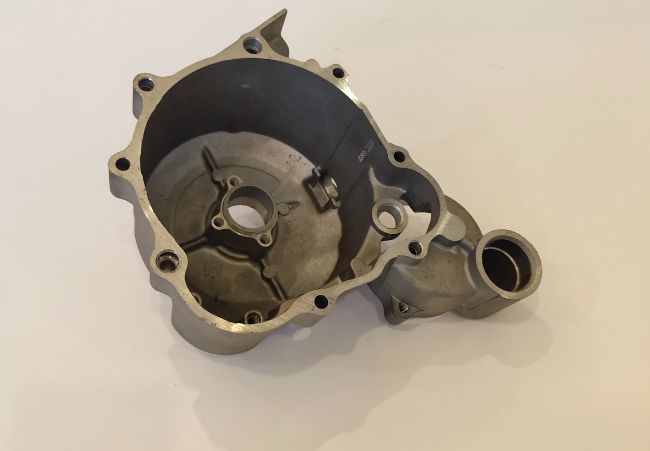
Key Properties:
✓ Excellent fluidity for thin-wall & complex geometries
✓ Strong corrosion resistance
✓ Superior dimensional stabilityTypical Applications:
- Automotive components (engine housings, transmission cases)
- Electronic enclosures
- Appliance housings
-
 A380 (AlSi8Cu3) – High-Strength North American Standard
Key Properties:
✓ Higher mechanical strength than ADC12
✓ Enhanced thermal resistance
✓ Superior wear resistanceTypical Applications:
- Automotive structural parts (engine brackets, transmission housings)
- Power tool casings
- Heat sinks
-

Key Properties:
✓ Better strength and corrosion resistance than ADC12
✓ Slightly reduced fluidity (requires optimized mold design)Typical Applications:
- Marine/harsh environment components
- Outdoor equipment
- Critical automotive engine parts
WHY BillowPeak?

our engineering team have more than 10 years experiences

most of the equipments are imported from Japan

we provide from concept design to come to truth one stop service

we keep in touch with customers after received the molds
Advanced Manufacturing & Automation
As one of the leading die casting aluminium manufacturers, we utilize state-of-the-art aluminum die casting tools and high-precision equipment to ensure consistent quality. Our die casting mold making process is optimized with automation, including robotic handling and CNC machining, reducing defects and increasing efficiency. Partnering with a reliable aluminium die casting supplier ensures precision in every production step.

Strict Quality Control & Inspection
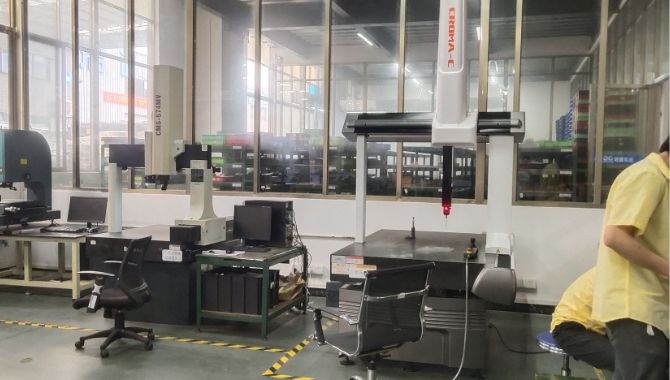
We are a certified die casting manufacturer committed to the highest quality standards. With advanced die casting mold design and rigorous testing, including X-ray inspection, CMM measurement, and material analysis, we guarantee defect-free components. Our die casting mould solutions follow strict casting mold design principles to ensure durability and performance for every industry application.
Expert Die Casting Mold Design & Manufacturing
Our in-house die casting mold manufacturer team specializes in designing and engineering custom molds for diverse industries. With expertise in die casting design, we optimize die casting mold making using high-quality materials like H13 and 8407 steel. Our die castings manufacturers integrate advanced casting mold design technologies to enhance mold longevity and casting precision, delivering cost-effective solutions.

BillowPeak: Your Trusted Partner in High-Precision Die Casting


As a leading aluminum die casting manufacturer, we specialize in producing high-quality die casting products with superior precision and durability. Our advanced die casting factory is equipped with cutting-edge automation and CNC machining, ensuring efficiency and consistency in every production run. Utilizing premium aluminum die casting alloys, we manufacture components that offer excellent strength, lightweight properties, and corrosion resistance. Our expertise in die casting aluminium alloys allows us to meet the stringent requirements of industries such as automotive, aerospace, and electronics. With a commitment to innovation and quality, BillowPeak delivers cost-effective solutions, making us a preferred die casting factory for global clients seeking high-performance casted components.
Top 6 Industries Benefiting from High-Precision Die Casting Dies

The automotive sector is one of the largest consumers of die casting dies, producing lightweight yet strong components. Die casting manufacturers supply precision die casting parts like engine blocks, transmission housings, and structural components. With aluminum injection molding, automakers achieve fuel efficiency without compromising durability. Leading die casting die manufacturers ensure high-performance molds for mass production.

The aerospace industry relies on die casting mold technology for producing complex, lightweight, and high-strength components. Aluminum die casting manufacturers create critical parts like aircraft brackets, housings, and engine components using aluminum metal injection molding. Precision-engineered die casting dies guarantee high tolerance and consistency, meeting strict industry regulations and safety standards.

From smartphone casings to heat sinks and connectors, the electronics sector benefits from die casting mold precision. Die casting die manufacturers provide solutions that ensure efficient heat dissipation and electromagnetic shielding. Aluminum injection molding enables mass production of lightweight yet robust die casting parts, supporting the rapid growth of smart devices and high-speed communication systems.

Industrial machines and heavy equipment require high-strength die casting parts for durability and performance. Die casting manufacturers produce motor housings, gears, and hydraulic components with die casting dies designed for long-term use. Utilizing aluminum metal injection molding, manufacturers optimize weight reduction while maintaining structural integrity, ensuring efficiency in automation and mechanical operations.

The medical industry demands precision, and die casting mold solutions provide reliable components for imaging devices, surgical instruments, and diagnostic equipment. Die casting manufacturers produce corrosion-resistant and biocompatible die casting parts using aluminum injection molding. High-quality die casting dies ensure that medical devices meet stringent regulatory and performance requirements.

From kitchen appliances to power tools, die casting die manufacturers supply essential components to the consumer goods market. Die casting mold technology ensures durable, cost-effective production for products like vacuum cleaners, blenders, and electric shavers. Aluminum die casting manufacturers utilize aluminum metal injection molding to create lightweight, aesthetically appealing, and functional components for daily use.

Die Casting Parts Related Product


In die casting, a die is a precision-machined steel mold consisting of two hardened halves (cover and ejector) that form the cavity for molten metal. Crafted from heat-resistant H13 or P20 tool steel (HRC 45-52), it features cooling channels, ejector pins, and often sliding cores for complex geometries. Unlike plastic injection molds, dies withstand extreme pressures (500-1500+ bar) and thermal cycling (600°C+ aluminum melts). A well-maintained die lasts 100,000+ cycles while holding tolerances to ±0.1mm. Critical components include the sprue bushing, runner system, and venting slots – all optimized for rapid, repeatable production of near-net-shape metal parts.
Die casting produces high-volume, precision metal parts with excellent dimensional stability and surface finishes. It’s ideal for thin-walled components requiring strength-to-weight ratios, like automotive transmission housings (A380 aluminum), smartphone frames (AZ91D magnesium), and power tool gearboxes (Zamak 3 zinc). The process excels at complex geometries with tight tolerances (±0.1mm), eliminating secondary machining for features like heat sinks with integral fins or door hardware with pre-cast hinge points. Major industries leverage die casting for its cost-efficiency at scale – from medical device housings (FDA-compliant alloys) to EV battery trays with coolant channels cast-in-place. Unlike sand casting, die casting achieves Class 1 surface finishes (Ra 0.8-1.6μm) straight from the mold, crucial for visible components like faucets or automotive trim.
Die Manufacturing Process:
- Design: CAD models define part geometry, accounting for shrinkage (0.5-0.7% for aluminum), draft angles (1-3°), and parting lines.
- Material Selection: H13 tool steel (HRC 48-52) is standard for high-pressure dies, often vacuum-arc remelted for purity.
- Machining: 5-axis CNC mills cavity surfaces to ±0.025mm, while EDM creates intricate details like texturing or undercuts.
- Heat Treatment: Double tempering at 540-600°C optimizes hardness and reduces residual stresses.
- Surface Engineering: TD coating (titanium carbide) or nitriding extends die life by 300% against aluminum erosion.
- Validation: First-shot analysis checks for flash formation, requiring iterative polishing of mating surfaces.
Pro Tip: Incorporate conformal cooling channels during machining to reduce cycle times by 15-20%. Dies typically require refurbishment every 50k shots.
Example: Tesla’s gigacast rear underbody – a single 440-pound aluminum (A356-T6) die casting replacing 70+ stamped steel parts. This innovation reduces weight by 10%, cuts assembly robots by 300 units, and improves crash structure integrity through monolithic design. The die utilizes 9,000-ton clamping force and features patented vacuum venting to achieve <0.2% porosity in the massive component (1.5m x 2m). Unlike conventional castings, Tesla’s process maintains Class II surface finish (Ra 3.2μm) as-cast, eliminating secondary machining for non-cosmetic areas. The die itself weighs 80 tons with conformal cooling channels maintaining ±5°C thermal stability during 90-second cycles. This application demonstrates die casting’s evolution from small components to structural automotive elements.
Cost Analysis of Die Casting:
Initial tooling is capital-intensive (20k–500k for dies), but unit costs become competitive at scale. For high-volume production (50k+ units), aluminum parts typically run 2–15 per piece—cheaper than CNC machining but pricier than plastic injection. The breakeven point vs. sand casting occurs around 5,000 units for mid-size components.
Key Cost Drivers:
- Material: Magnesium costs 3x aluminum but saves weight
- Complexity: Multi-slide dies add 30–50% to tooling
- Precision: Holding ±0.05mm tolerance increases cost 20%
Hidden Savings:
- Eliminates 60–80% secondary machining
- 30% faster cycles than squeeze casting
- 5–8x longer die life vs. forging dies
For prototypes, consider “soft tooling” (aluminum dies at 1/5 the cost, good for 500 shots). True economy emerges at 100k+ units.
Optimal Metals for Die Casting:
For high strength-to-weight: A380 aluminum (most common) balances fluidity, thermal conductivity, and cost—ideal for automotive housings and electronics. AZ91D magnesium (17% lighter than aluminum) excels in aerospace/consumer tech but requires argon shielding during melting.
For precision thin walls: Zamak 3 zinc (0.4mm achievable) dominates small components like locks and connectors, with superior as-cast surface finish (Ra 0.8μm).
For thermal/electrical performance: C87850 copper alloy (UNS) enables die-cast heat sinks with 90% IACS conductivity, though requires 1,100°C+ dies.
Emerging choice: AlSi10MnMg for EVs—30% higher elongation vs. A380 while maintaining T7 heat treatability.
Die Casting Applications Beyond the Obvious:
While automotive (engine blocks, e-bike frames) and consumer electronics (laptop chassis, router housings) dominate, die casting shines in unexpected niches:
- Medical: MRI component shields (zinc for RF blocking)
- Energy: Wind turbine pitch system gears (high-integrity aluminum)
- Robotics: Collaborative robot joint housings (magnesium for vibration damping)
- HVAC: Scroll compressor涡旋盘 (near-net-shape aluminum with 0.05mm runout tolerance)
The process uniquely combines thin walls (0.5mm achievable with zinc), embedded inserts (threaded brass bushings cast-in-place), and cosmetic finishes (as-cast Ra 0.4μm for bezels). Recent breakthroughs include liquid-forged hybrid castings for suspension knuckles – 20% stronger than traditional die casting.
Key differentiator: Only die casting delivers both production volumes (100k+/yr) and precision (CTQ dimensions held without machining) for these applications.


